2026年9月28日 / Life in Japan
Can You Stay After Your Period of Stay Expires? Rules and Points to Note on the “Special Period” During Visa Review
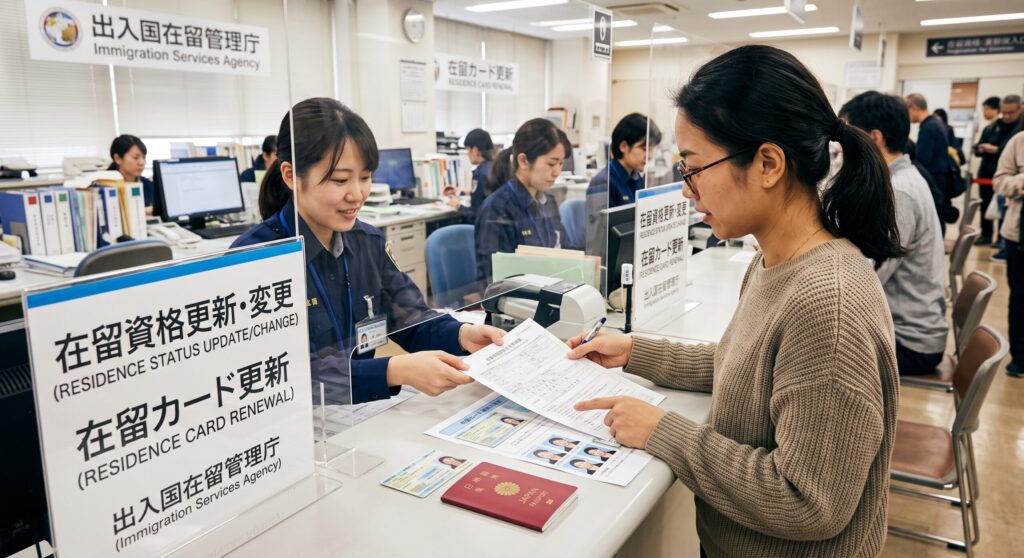
Hello! This is Legal Gate Immigration Lawyer Office (VISA SUPPORT JAPAN) in Oita Prefecture.
Have you ever panicked during a visa extension or change procedure when the expiry date on your residence card arrived, wondering, “Does this mean I am now staying illegally?”
The Immigration Control Act provides a rule called the “special period (tokurei kikan)” to prevent exactly this situation. (*Many people call it “tokutei kikan,” but the official term is “special period (tokurei kikan).”)
This time, we will explain this special period in an easy-to-understand way, covering who is eligible, the rules for how to spend it, and whether you can use special re-entry permission.
1. Who Is Covered by the Special Period and Who Is Not
The special period is a system that allows you to continue staying in Japan legally after you file an extension or change application by your period of stay expiry date, until the examination result is issued or for up to 2 months (60 days) from the original expiry date—whichever comes first.
-
Those who are covered People whose current period of stay is “31 days or more” and who completed their application by the expiry date. (*When the application is accepted, an “application pending” stamp is placed on the back of the residence card.)
-
Those who are not covered People whose current period of stay is “30 days or less” (such as a 15-day or 30-day Temporary Visitor visa). People who go to the Immigration Bureau even one day after their period of stay has expired (in this case, they are already in overstay status, and the special period does not apply).
2. What You May and May Not Do During the Special Period
During the special period, the rules of your original (old) visa simply continue to apply. Misunderstanding this point can lead to illegal work.
-
What you may do
-
Continue the same activities as before: If you are waiting for the extension of a work visa such as “Engineer/Specialist in Humanities/International Services,” you can continue working at your company as before.
-
Activities outside the status of residence (part-time work): If an international student holds permission to engage in activities outside the status of residence, they may continue to work part-time “within 28 hours per week” during the special period as well.
-
-
What you may not do
-
Starting the activities of the new visa ahead of time: For example, if you have applied to change from a “Student visa” to a “work visa,” you are still treated as a student until the result is issued. Starting to work as a full-time regular employee at the company that gave you a job offer before the visa is approved is illegal (a violation of activities outside the status of residence).
-
3. Can You Leave Japan Using “Special Re-entry Permission” During the Special Period?
To get straight to the point, even during the special period it is possible to make a temporary trip home or an overseas business trip using “special re-entry permission.”
However, there are the following extremely important risks and points to note.
-
You must return within the special period (within 2 months from the original expiry date): If the special period expires while you are outside Japan, you will not be able to re-enter Japan, and the visa procedure you applied for will be nullified.
-
Risk of missing communications from the Immigration Bureau: While you are abroad, a postcard with the result notification or a “request for submission of additional documents” may arrive from the Immigration Bureau. If you miss the response deadline, there is a risk of denial, so being away from home for a long period is extremely dangerous.
The Immigration Bureau itself does not recommend leaving Japan while an application is pending. Except in emergencies where you absolutely must leave the country, waiting in Japan until the result is issued is the safest choice.
4. Points for Company Personnel to Watch Out For
Even if the expiry date on the front of a foreign employee’s residence card has passed, if there is a stamp on the back reading “Application for change of status of residence pending” or “Application for extension of period of stay pending,” the company can legally continue to employ them for 2 months after the expiry date.
However, be sure to confirm that the new residence card has been received before the 2 months elapse, and establish firm internal rules for keeping a copy of the latest card on file.
Leave Visa Extensions and Schedule Management to Our Office!
The special period is a convenient mechanism, but it must be handled with accurate legal knowledge, including “counting the 2 months” and “the risks if the application is denied.”
If you are a company or a foreign national who feels, “I’m worried because an employee’s visa extension deadline is approaching” or “I want to leave schedule management during the application to a professional,” please consult Legal Gate Immigration Lawyer Office (VISA SUPPORT JAPAN) in Oita Prefecture. We will support your procedures with the best advice tailored to your situation!
![[Must-Read for Foreign Nationals Returning Home] What Is the “Lump-sum Withdrawal Payment” That Refunds Your Pension? Key Points to Know](https://visasapo.com/en/wp-content/uploads/2026/09/blog0003-600x400.jpg)