2026年10月26日 / Dependent
[Complete Guide to the “Dependent” Status of Residence] A Thorough Explanation of Required Documents, Requirements, Key Examination Points, Points to Note by the Supporter’s Visa Type, and Denial Cases!
Hello! This is Legal Gate Immigration Lawyer Office (VISA SUPPORT JAPAN), serving clients nationwide.
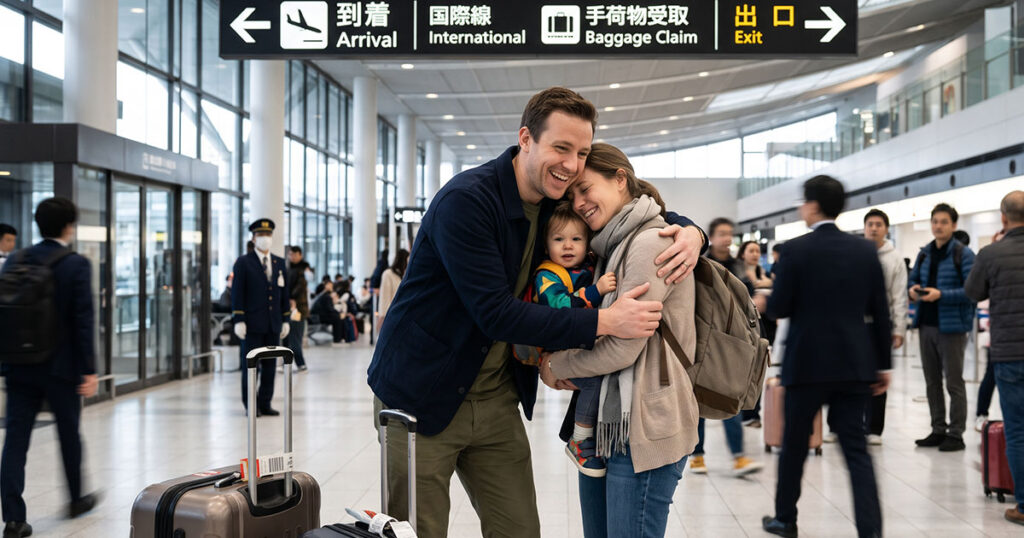
We receive a great many inquiries from foreign nationals working in Japan and from international students, such as “I want to bring my wife (husband) or children who are in my home country to Japan and live together” or “My child was born in Japan and I want to obtain a visa for them.”In addition, for companies that employ foreign personnel, supporting employees in bringing their families over is an important factor that directly contributes to long-term retention of personnel.
The status of residence (visa) obtained in order to bring a foreign national’s spouse or children to Japan is “Dependent” (Family Stay).Permission is not granted easily simply because “we are married” or “this is my biological child”; in the Immigration Bureau’s examination, detailed requirements such as the sponsor’s income situation, the type of status of residence, and the age of the child being brought over are strictly checked.
This time, we will thoroughly and clearly explain the basic requirements for the status of residence “Dependent,” the required documents, the key points of the examination, typical cases of denial, and even “points to note for each status of residence held by the sponsor”!
1. The Three Basic Requirements for Obtaining the Status of Residence “Dependent”
“Dependent” is a visa granted for “daily activities carried out as a spouse or child receiving support from” a foreign national (the sponsor) who resides in Japan with certain statuses of residence.In order to obtain permission, all three of the following requirements must be met.
① The sponsor must hold a “status of residence eligible for Dependent status”
It is a prerequisite that the sponsor (the person bringing the family over) resides in Japan legally holding a work visa or student visa, etc., as described below (statuses such as “Specified Skilled Worker (Tokutei Ginou) (i)” and “Technical Intern Training” are in principle not eligible).
② The family member must be a legally valid “spouse” or “child”
The eligible family members are limited to a “spouse (husband/wife)” in a legally recognized marital relationship and “children (including biological children, adopted children, and acknowledged children born out of wedlock).”
-
Family members not eligible: Parents, siblings, grandparents and other relatives, as well as common-law husbands/wives and divorced former spouses are not eligible for “Dependent” status.
③ The sponsor must have “stable capacity to support” and the family member must actually receive support
Through the sponsor’s income or savings, the entire household, including the family members being brought over, must be able to live stably in Japan (without becoming a public burden).In addition, it is a prerequisite that they live together and are economically dependent on the sponsor.
2. [Important] Differences and Points to Note for Each Status of Residence (Visa) Held by the Sponsor
Depending on which status of residence the foreign national (sponsor) in Japan holds, whether family members can be brought over and the difficulty of the examination differ greatly.
|
Work visas in general (Engineer/Specialist in Humanities/International Services, Skilled Labor, Intra-company Transferee, Nursing Care, Medical Services, Professor, Instructor, etc.) Specified Skilled Worker (Tokutei Ginou) (ii) |
〇 Possible |
**”Dependent”** is obtained. The most common case. Stable monthly salary income and tax payment status are checked. |
|
**”Dependent”** is obtained. The stability of the company’s management, whether the officer’s remuneration is set at an appropriate level, and whether individual and corporate taxes have been paid in full are strictly examined. |
||
|
**”Dependent”** is obtained. *If the spouse works full-time, the special “Designated Activities” status, etc., may also be chosen. Furthermore, if certain annual income requirements, etc., are met, accompaniment by “parents” or a “domestic worker” (Designated Activities) may exceptionally be permitted. |
||
|
“Dependent” is obtained. *Limited to “graduate students, university students, junior college students,” etc. Family members of “Japanese language school students” and “vocational school students” are in principle not eligible for Dependent status. In addition, since part-time income under permission to engage in activity other than that permitted by the status of residence is unlikely to be regarded as stable income, sufficient savings, scholarships, or proof of remittances from the home country are essential. |
||
|
Specified Skilled Worker (Tokutei Ginou) (i) / Technical Intern Training (*Including Employment for Skill Development (Ikusei Shuro) from 2027) |
✕ Not possible in principle |
In principle, family members cannot be brought over. *Exception: Only where the person originally resided in Japan under “Student” status, etc., their family members were already in Japan under “Dependent” status, and the sponsor then transitioned to “Specified Skilled Worker (Tokutei Ginou) (i),” the family members may change to the special **”Designated Activities”** status and continue their stay. |
| Permanent Resident / Long-Term Resident | 〇 Possible (different visa) | Rather than “Dependent,” an application is made for the **”Spouse or Child of Permanent Resident” or “Long-Term Resident”** visa. |
3. The “Four Major Points of Examination” That Immigration Looks At
Point 1: “Income and tax payment status” commensurate with the number of household members
There is no uniform statutory line such as “an annual income of X million yen or more,” but the examination comprehensively considers the supporter’s income, the cost of living in the area of residence, rent, and the number of family members to be supported in order to judge whether “daily life can be sustained.” In addition, if there are unpaid or overdue resident taxes, or if many overseas relatives who are not actually being supported are included as “dependent deductions” so that resident tax becomes exempt (or extremely low), doubts will be raised about the ability to support and the fulfillment of public obligations, which is extremely disadvantageous in the examination.
Point 2: The purpose of coming to Japan must not be “work (earning money abroad)”
Dependent status is a visa whose purpose is strictly “to live together.” If it is suspected that the purpose is to earn money—for example, “I want to bring them to Japan and have them earn a lot through part-time work”—the application will be denied.
Point 3: A reasonable justification when the child’s “age” is high
When bringing a child to Japan, the process is smooth if the child is young, but in cases where a child is suddenly brought over after reaching the age of 16 to 18 or older (around the age of high school graduation), the Immigration Bureau examines the case very strictly, questioning: “Is this not for the purpose of studying or living in Japan, but in fact to have the child do part-time work (employment) in Japan?”A reasonable explanation and a plan are essential, addressing questions such as “Why is it necessary to bring the child to Japan now, when they have been living in their home country until now?” and “Will the child enroll in a Japanese school after arriving in Japan?”
Point 4: Credibility of the marital or parent-child relationship (whether it is a sham marriage)
If the period between the marriage and the application is extremely short, if there is a large age difference, or if there is little record of living together in the home country, it is necessary to prove that “the marriage is genuine” by attaching not only an official marriage certificate but also photographs from the time of the relationship, call and chat histories on social media, and remittance records.
4. Typical cases in which “Dependent” status is denied
The following are representative examples that are likely to be denied in the actual immigration examination.
-
Case 1: Both spouses are “students,” and the only income is from part-time work
When a student brings over a spouse, even if they have almost no savings and claim “It will be fine because I will work part-time 28 hours a week to earn living expenses,” since the essential purpose of a student visa is study, the ability to support is not recognized and the application is denied.
-
Case 2: The taxable income of the supporter, who is a sole proprietor (or company employee), is extremely low
If excessive expenses are claimed in the tax return so that income is kept at a loss or at a few hundred thousand yen, or if numerous overseas dependent deductions are included so that the person becomes tax-exempt, it will be judged that there is no ability to support in terms of the figures, and the application will be denied.
-
Case 3: An application for a 17-year-old child filed with the vague reason “I want them to study Japanese”
There are many cases in which an attempt to bring over a child who is at the stage of graduating from high school in their home country, without having decided on a specific school for further education, results in denial on the grounds of “suspicion of a work purpose.”
-
Case 4: At the time of extension, “the spouse had been working part-time in excess of 28 hours per week (overwork)”
This is a case not only at the time of bringing a family member from overseas, but where it is discovered from the resident tax certificate submitted at the time of the extension application that the spouse with Dependent status had been working beyond the upper limit for activities outside the permitted status (28 hours per week), and the extension is denied.
-
Case 5: Living separately from the supporter (separation without a legitimate reason)
If the supporter and the dependent live at different addresses despite there being no reasonable justification such as a job transfer without family, it is deemed that there is no actual activity corresponding to the status of residence (visa).
5. Required documents for a “Dependent” application and reference links from the Immigration Services Agency
The basic required documents when bringing family members from overseas (application for a Certificate of Eligibility (COE)) and when extending the period of stay are as follows.
Main list of required documents
-
Application for Certificate of Eligibility(for extensions, the “Application for Extension of Period of Stay”)
-
Photograph (4 cm high × 3 cm wide) 1 sheet
-
Self-addressed return envelope (for Certificate of Eligibility applications submitted at the counter or by mail / with stamps affixed for simplified registered mail)
-
One of the following documents proving the family relationship with the supporter
-
Certificate of acceptance of marriage registration or marriage certificate (copy)
-
Birth certificate (copy)
-
Family register (koseki tohon), etc. (*A Japanese translation is required for all documents written in a foreign language.)
-
-
Copy of the supporter’s residence card (or copy of passport)
-
Documents proving the supporter’s occupation and income
-
For company employees, business owners, etc.: Certificate of employment (or a copy of the business license, etc.), certificate of resident tax assessment (or exemption) and tax payment certificate(showing the total annual income and tax payment status)
-
For international students, etc.: Certificate of bank balance in the supporter’s name, certificate of scholarship award, certificate of remittance from the home country, or other materials proving the ability to cover living expenses
-
Reference links (Immigration Services Agency)
For the latest application forms and detailed guidelines, please check the official pages of the Immigration Services Agency below.
-
Guidance and required documents for the status of residence (visa) “Dependent” (Immigration Services Agency)
Immigration Services Agency: Status of residence (visa) “Dependent”
-
For those residing under “Dependent” status who wish to work after graduating from a Japanese high school (Immigration Services Agency)
Immigration Services Agency: For those who wish to work in Japan after graduating from high school
Summary: Leave the process of bringing your precious family to Japan and renewing their visas to our office!
Living together with family in Japan brings the greatest peace of mind to the foreign national, and for the employing company it is also a major driving force that keeps employees motivated and working for the long term. At the same time, there are many cases in which simply submitting the documents as they are can easily lead to a denial—such as when the amount on the tax certificate is low immediately after changing jobs, when the applicant is an international student bringing family over, or when bringing over a child of high-school age.
“I would like an assessment of whether I can bring my wife and children over at the same time with my current annual income and savings.”
“I want to bring over my child aged 16 or older who is in my home country, so I would like support in drafting the statement of reasons.”
“As part of our employee benefits, we would like to entrust the procedures for bringing over the families of the foreign employees we hire to a professional.”
Foreign nationals and companies with such concerns or requests are welcome to consult Legal Gate Immigration Lawyer Office (VISA SUPPORT JAPAN), which serves clients nationwide. We fully support online applications and provide prompt, careful support from anywhere in Japan so that your family can live in Japan with peace of mind as soon as possible!